
Is Speech Action?
Something I’ve noticed, in fiction (and in real life, but I’m far less willing to comment on how people arrange their actual in-person relationships), is that things seem unbalanced.
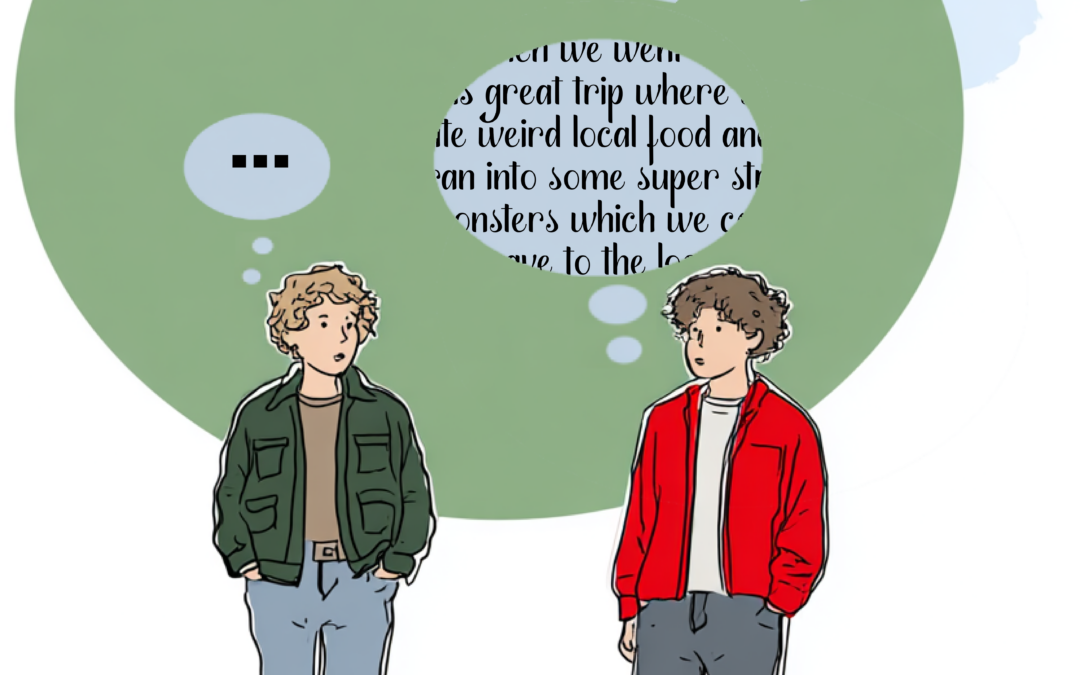
How often have you read a story – usually a romance – where there’s a Silent (sometimes a Grumpy) character, who keeps their emotions well tamped down, paired with a Chatty character (sometimes a Sunshine) whose emotional experiences happen out in the open air?
And then, there’s some miscommunication or something, where the Chatty doesn’t know how the Silent character feels about them, even though Silent has been Doing Things for Chatty. (These things can range from cooking food to conquering the world, depending on the genre of the story.)
And then!! There’s a revelation!! Chatty figures out that Taking Action (often called Acts of Service) is how Silent expresses their emotions, so even though Chatty would like to hear the words ‘I love you’ spoken out loud with Silent’s mouth, they “don’t have to”, because now they understand that Silent has been ‘saying it’ all along.
And I wonder.
Since when did speaking out loud stop being an action a person could take?
And why does Silent get to have their emotional needs met (not having to discuss emotions out loud) and Chatty doesn’t (being able to discuss emotions out loud)?
It strikes me as an odd imbalance. I’m not saying that Silent should be forced to expose all their vulnerable inner workings at all times, but surely, if one’s method of expressing love is Acts of Service, and the person one loves really needs to hear the words out loud, one could … just say it.
It’s often framed as if Chatty is somehow forcing Silent to do something so against their nature that it’s unkind of Chatty to even have the need for verbal affirmation. And that kind of bothers me. Both the idea that a person is fundamentally incapable of verbalizing emotions – verbalizing positive emotions, I mean, they’re often very able to say angry/mean things – and the idea that one person in a relationship gets to completely control the emotional landscape of the entire thing.
It’s not fair for Silent to refuse to ever say out-loud-with-their-mouth-words the things that Chatty needs to hear. If they work it out so that Silent can, say, write them down and that’s good enough for Chatty, that’s fine. But Chatty deserves to have as much of their needs met as Silent does… and often, in stories, they’re pilloried for wanting that.
There’s a lot of stuff out there right now about boundaries and taking responsibility for oneself in relationships and I support these things. Healthy boundaries and personal responsibility are both vital, in all relationships, not just romantic ones. But this doesn’t seem healthy to me, and it bugs me when I see it so much in fiction – especially when it’s depicted as something Chatty needs to learn to accept.
I think I’m going to start taking notes on how often I do see this trope (is it a trope, or is it just a quirk?) and in what sort of relationships. Are they usually ones in which there are other power dynamics going on, or is it something that happens in ‘flat power’ relationships? Is it ever addressed on-page, or is Chatty the only one who catches flack for wanting ‘more’ from the relationship? How often does Silent overcome their unwillingness to use words, and are they praised or not for that?
You should, maybe, look for this in your own reading, and also maybe in your own life. Compromise is a fundamental part of a healthy relationship and if it’s only happening on one side of the relationship, then it’s not a healthy one. It’s okay to have needs and require them to be met by the people around you.
Here, I’ll go first.
I love you.